Source Unisex Adjustable Trucker Hat for Events, Work, and Sports
Explore 30 listings for the unisex adjustable trucker hat, featuring options in polyester/cotton or 100% cotton with flat or applique embroidery. Buyers can compare customization, pricing, and seasonal suitability for events, work, and sports.
Key considerations
Products List




Comprehensive Sourcing Guide
Strategic Sourcing Guide for Unisex Adjustable Trucker Hats
Understanding Product Specifications and Variations
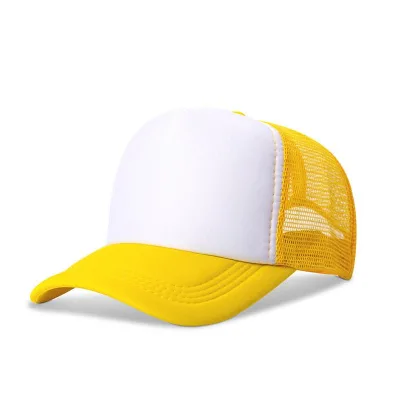
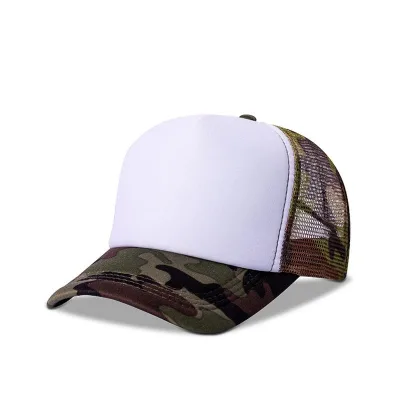
The unisex adjustable trucker hat represents a versatile category within headwear procurement, characterized by a distinct structural design that combines a structured front panel with a breathable mesh back. Based on observed market data, the core product model frequently identified in this segment is the "trucker hat," which often adheres to a standard 6-panel construction. This configuration provides a classic silhouette while allowing for the integration of various customization methods. The crown of these hats is typically described as "With Crown," ensuring a defined shape that maintains its form during wear.
Material composition is a primary differentiator in this category. Procurement data indicates a split in material standards, with some units specified as "Polyester/Cotton" blends, while others are listed as "100% Cotton." The choice between these materials often dictates the final hand-feel, durability, and breathability of the product. For buyers seeking a balance between structure and comfort, the blend option is frequently preferred, whereas pure cotton variants may offer a softer, more traditional aesthetic. The mesh back, a defining feature of the trucker style, is often associated with "Breathable" and "Lightweight" attributes, making these items suitable for warm weather or high-activity environments.
Color options are extensive, with market listings showing availability in Yellow, White, Red, Purple, Orange, Green, Gray, Brown, Blue, Black, and "Colourful" variations. This wide spectrum allows for significant brand alignment or thematic consistency. The "Pattern Theme" is often observed as "Letter," suggesting that these hats are frequently used for branding, team identification, or promotional messaging. Furthermore, the "Style" attributes observed include "Striped" and "Checked," indicating that pattern complexity extends beyond simple solid colors to include woven or printed designs.
Customization Capabilities and Branding Integration
One of the most compelling aspects of sourcing unisex adjustable trucker hats is the high degree of customization available. The product attributes explicitly state that "Customization: Available" and that suppliers "Can Customize Various Caps." This flexibility extends to multiple dimensions of the product, including size, logo placement, and decorative elements. The "Logo" specification is particularly robust, offering options for "3D," "Flat," and "Screen Printing," alongside "Custom Design Is Welcome." This implies that buyers are not limited to a single decoration method but can select the technique that best suits their brand identity and budget.
The "Pattern Technology" further supports this customization. "Flat Embroidery" and "Applique Embroidery" are both observed processes, allowing for different textures and visual depths on the front panel. For buyers requiring specific branding, the ability to request "Custom" logos and "Custom" sizes is critical. The "prod_standard" often notes "58-60cm" or "58CM" as a baseline, with the explicit statement that "Other Size IS Ok." This confirms that the adjustable nature of the hat is not merely a feature of the closure mechanism but extends to the overall head circumference, accommodating a diverse range of adult users.
The "Special Features" list highlights additional customization potential, such as "Rechargeable" or "Smart" capabilities, though these are less common in standard trucker hats and may represent niche product lines. More standard features include "Wrinkle Free," "Water Resistant," and "Windproof," which can be integrated into the fabric selection. The "Ponytail Hole" feature is another specific customization noted, catering to functional needs for specific demographics within the unisex market. When evaluating suppliers, buyers should verify which of these specific features are standard versus which require a custom order, as the "MOQ" (Minimum Order Quantity) often varies based on the complexity of the customization requested.
Compliance, Certification, and Quality Standards
In the context of B2B procurement, verifying compliance and quality standards is essential to mitigate risk. The supplied data indicates that some suppliers in this category hold "SGS" certification. SGS is a recognized inspection, verification, testing, and certification company, and its presence suggests that the supplier has undergone third-party verification for product quality or safety. However, buyers must be cautious not to assume that all products in this category automatically carry this certification. The data also references "ISO 27001:2022" in a low-confidence background context; therefore, this should not be cited as a guaranteed standard for the product itself but rather as a potential area for verification regarding the supplier's data security or management systems.
The "prod_standard" for the hats themselves often relates to physical dimensions, such as "58CM," or material composition like "Cotton" or "foam." The "foam" standard likely refers to the material used in the front panel to maintain structure, which is a common feature in trucker hats. Buyers should request specific test reports or certificates of analysis to confirm that the materials meet their internal safety and quality requirements, particularly if the hats are intended for children or specific industrial environments, although the primary "Applicable User" listed is "Adults."
When evaluating the "Standard" of the product, it is important to distinguish between the physical standard (size, material) and the quality standard (certifications). The data mentions "custom" as a product standard in several instances, which reinforces the bespoke nature of the industry. Buyers should explicitly ask suppliers to confirm if their products meet specific international safety standards for textiles, such as restrictions on harmful substances, even if not explicitly listed in the general product attributes. The "Transportation" methods listed include "by Air, by Sea, DHL, FedEx, UPS," which indicates a global supply chain capability, but buyers must ensure that the chosen shipping method complies with import regulations in their target market.
Cost Drivers and Pricing Dynamics
The pricing structure for unisex adjustable trucker hats is highly dynamic and influenced by several key factors. The observed listed price range in the market is between 0.5 and 6 USD, a wide spectrum that reflects the variability in material quality, customization complexity, and order volume. The "Price" attribute is explicitly noted as "Depending on Quantity," which is a standard practice in the apparel industry. This suggests that unit costs will decrease significantly as the order volume increases, a critical consideration for budget planning.
The "MOQ" (Minimum Order Quantity) is another major cost driver. The observed range is between 20 and 1000 units, with a specific data point highlighting an MOQ of "100PCS." This variability means that buyers with smaller budget constraints or testing needs may find suppliers with lower MOQs, while those planning large-scale campaigns must prepare for higher initial commitments. The "Sample Time" is noted as "5 to 7 Workdays," which is a relatively short lead time for customization, allowing for rapid iteration and approval of designs before full production begins.
Additional cost factors include the choice of "Pattern Technology" and "Logo" application. "3D" embroidery or "Applique" techniques typically incur higher costs than "Flat Embroidery" or "Screen Printing" due to the increased labor and material requirements. The "prod_packing" method, such as "25PCS/Polybag, 100PCS/Carton," also impacts logistics costs. Bulk packing in cartons is generally more cost-effective for shipping than individual polybagging, but buyers must weigh this against their internal storage and distribution needs. The "Brand Name" "Capwindow" is mentioned in the data, but buyers should not assume this is the only supplier; rather, they should use this as an example of the type of branding that may appear on product listings and ensure they are dealing with the actual manufacturer or authorized distributor.
Typical Applications and User Demographics
The unisex adjustable trucker hat is designed for a broad demographic, with the "Applicable User" specified as "Adults" and the "Gender" listed as "Unisex." This versatility makes the product suitable for a wide array of applications, from corporate branding and promotional events to team uniforms and fashion accessories. The "Season" attributes cover "Winter, Summer, Spring / Autumn," indicating that the product is designed for year-round use, likely due to the breathable mesh back which provides cooling in summer and the potential for layering or material selection for colder months.
Specific applications can be inferred from the "Special Features." The "Sun Protection" and "UV Resistant" attributes make these hats ideal for outdoor activities, construction sites, or agricultural work. The "Water Resistant" and "Windproof" features further enhance their utility in variable weather conditions. For corporate or promotional use, the "Custom" logo and "Letter" pattern themes allow for clear brand visibility. The "Foldable" and "Lightweight" features are particularly valuable for travel and storage, making them excellent choices for giveaways or events where space is limited.
The "Department" is listed as "Trucker Hat," which historically refers to a specific style of cap, but in modern procurement, it often encompasses a broader range of casual and workwear headgear. The "Kind" is also identified as "Trucker Cap," reinforcing the style classification. Buyers should consider the specific environment in which the hats will be used. For example, a "Game Used" feature suggests a connection to sports or entertainment, while "Music" or "Smart" features might indicate a niche market for tech-integrated apparel. Understanding these applications helps in selecting the right material and feature set, ensuring the product meets the functional requirements of the end-user.
Supplier Evaluation and Quality Control Protocols
Evaluating suppliers for unisex adjustable trucker hats requires a rigorous approach to ensure consistency and reliability. The "prod_origin" is listed as "China" and "Shanghai" or "Guangdong, China(Mainland)," which are major manufacturing hubs for textiles and apparel. While these locations offer access to a robust supply chain, buyers must conduct thorough due diligence. The presence of "SGS" certification is a positive indicator, but it should be verified against the specific batch of goods being ordered. Buyers should request valid certificates and cross-reference them with the supplier's business license to ensure authenticity.
Quality control (QC) is paramount in this category due to the high degree of customization. The "Pattern Technology" and "Logo" application methods must be inspected for consistency. For instance, "Flat Embroidery" should be checked for thread tension and alignment, while "Applique Embroidery" requires verification of the bonding strength and edge finishing. The "Material" composition, whether "Polyester/Cotton" or "100% Cotton," must be verified to ensure it matches the agreed-upon specifications. Buyers should implement a pre-production sample approval process, utilizing the "Sample Time" of 5 to 7 workdays to review physical prototypes before mass production begins.
The "prod_packing" standards, such as "25PCS/Polybag, 100PCS/Carton," should be inspected to ensure that the packaging protects the product during transit. Damaged or mislabeled packaging can lead to customer dissatisfaction and returns. Additionally, the "Transportation" methods offered by the supplier, including "DHL, FedEx, UPS," should be evaluated for reliability and cost-effectiveness. Buyers should establish clear communication channels to address any discrepancies in the "Custom" size or "Logo" design. Regular audits or third-party inspections during production can help maintain quality standards and ensure that the final product meets the buyer's expectations.
Long-Term Procurement and Supply Chain Considerations
For long-term success, buyers must consider the scalability and flexibility of their supply chain. The "Customization: Available" attribute suggests that suppliers are capable of adapting to changing brand needs, but this requires a strong partnership. Buyers should aim to establish a relationship with suppliers who can handle both small, frequent orders and large, seasonal runs. The "MOQ" range of 20 to 1000 units offers flexibility, but buyers should negotiate terms that allow for incremental increases in order volume without significant price penalties.
Sustainability and ethical sourcing are increasingly important in the apparel industry. While the provided data does not explicitly mention eco-friendly materials or labor standards, buyers should proactively inquire about the environmental impact of the "Polyester/Cotton" blends and the "100% Cotton" options. Questions regarding the sourcing of raw materials, dyeing processes, and labor conditions should be addressed to ensure alignment with corporate social responsibility (CSR) goals. The "Certification" of "SGS" may cover some of these aspects, but additional verification may be necessary.
Finally, buyers should plan for potential supply chain disruptions. The "Lead Time" for samples is short, but production lead times for large orders can vary. Establishing a buffer stock or maintaining a relationship with multiple suppliers can mitigate risks associated with delays. The "Standard" of "58-60cm" and the "Custom" size options provide a baseline, but buyers should ensure that their inventory management system can accommodate variations in sizing to meet diverse customer needs. By focusing on these long-term considerations, buyers can build a resilient and efficient procurement strategy for unisex adjustable trucker hats.
FAQs
What customization options are available for logos?
Custom logos are available with options for 3D, flat, and screen printing. Suppliers can also accommodate custom designs and various embroidery techniques like flat or applique to meet specific branding needs.
Can I order unisex adjustable trucker hats in custom sizes?
Yes, custom sizes are available for these hats. While standard sizes often range from 58 to 60 cm, buyers can request other specific dimensions to ensure a proper fit for their target audience.
Which materials are used for these trucker hats?
The hats are typically made from Polyester/Cotton blends or 100% Cotton. The material choice affects the hand-feel and durability, with blends offering structure and pure cotton providing a softer aesthetic.
What is the minimum order quantity for these products?
The minimum order quantity ranges from 20 to 1000 units depending on the supplier. Some vendors list a specific MOQ of 100 pieces, while others may accommodate smaller trial orders.
How long does it take to receive a sample?
Sample time is typically 5 to 7 workdays. This allows for rapid iteration and design approval before proceeding to full production of the custom trucker hats.
Are these hats suitable for all seasons?
Yes, they are suitable for Winter, Summer, Spring, and Autumn. The breathable mesh back makes them ideal for warm weather, while material options allow for year-round versatility.
What certifications do the suppliers hold?
Some suppliers hold SGS certification for product quality and safety. Buyers should verify specific certificates for their order batch to ensure compliance with international textile standards.